Friday, February 28, 2014

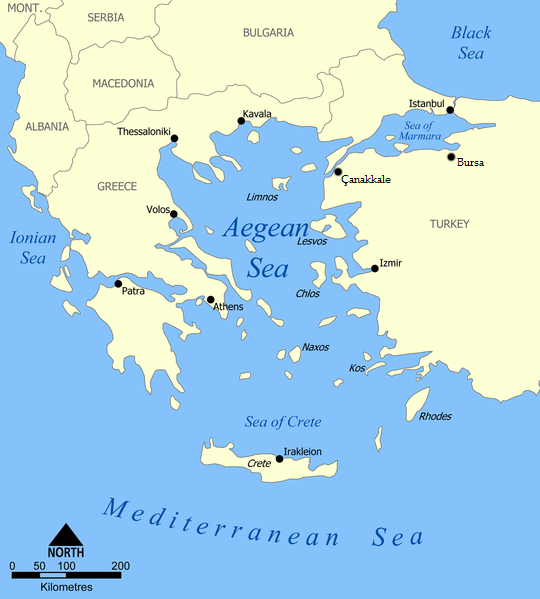
Where is Greece?

Today in West Civ., Matt and Phil attempted to teach the class but it kind of sucked. Then we talked more about Sparta and Athens and Mr. Schick should us these 2 commercials that were trying to get more tourist to come to Baltimore and Los Angeles. Now we have a project to do, which requires us making a commercial for Sparta and Athens. I plan on doing really well on this project because I need to get a good grade to bump up my overall grade. I have an 80, and that is kind of sad.  So we ended the class by going over locations that we need to know for the upcoming test sometime in the future. Here are my notes
Adriatic Sea


Ionia Sea

Aegean Sea

Mediterranean Sea (middle of the earth)   

Peloponnpose (peninsula)

Athens

Sparta

Crete

Thursday, February 27, 2014

Greece Project!

Today in West Civilization Mr. Schick wasn’t in school so we went to the art wing with our sub Mr. Gaudrea. Mr. Schick left us instructions on his blog for what to do in class. We had to make a comparison between the two city states, Athens and Sparta. We spread up into groups so we could work in google docs, which is so fun to use. My group made a power point about the topic and we spent the class researching information for it. Surprisingly I actually knew a lot about both city-states even without the research. There are very popular places and I hear a lot about them. So I guess we are going to continue this project in class tomorrow. Hopefully we do, because it’s a fun way to learn the material we need to know. I’m guessing Mr. Schick will be in school tomorrow so this should be fun. 

Wednesday, February 26, 2014

Missed Class

I wasn't in class today because I went on a field trip with STEM

Tuesday, February 25, 2014

Greece

Here are the notes we took today in West Civ. class:
Greece: mountains+ peninsula+hard to maneuver= people learning to travel by and build ships
Adriatic Sea
Developed independent communities mostly hated each other
Athenians vs Spartans (w/Persians) completely different type of people
20% of land good for farming
¼ fertile valleys
Grew grains, grapes, and olives
What they didn’t have they traded for w/ boats throughout the Mediterranean Sea
Lack of resources led to colonizing all over the place
Temperate weather conditions 48* in winter- 80* in summer
Mycenaean’s 2000 BC rocky ridge protected by a 20ft. wall
Monarchy
Dominated Greece for like 400 years
Controlled trade, got money, used money to build ships/buildings
1400 BC they invaded Crete by beating the Minoan’s
Absorbed their culture into their own
Homer was an old, blind man who composed the Iliad and the Odyssey
The Iliad was about the Trojan war w/ gods involved
The Odyssey was about a man trying to get home from war with the god of the sea throwing him off track for 20 years.
Arete- virtue/excellence
 Epics- narrative poems celebrating heroic deeds
Myths were created to explain creation
            Zeus: leader of all gods
            Hera: Zeus’s wife

            Athens- goddess of wisdom and beauty (Athens was named after her)

Sunday, February 23, 2014

Notes for LO2: The Aegean Encounter


Minoan Civilization
About 2200BC, a distinct civilization, known today as Minoan arose on the Aegean island of Crete. 
It drew its wealth from control of the surrounding seas and from thriving trade with many eastern Mediterranean lands, above Egypt.

The Arrival of the Greeks: Mycenaean Civilization
There is no way of knowing exactly when, where, or how the Greeks developed into a separate ethnic group, but at the time that they made their way into their new homeland, they seem to have been a European barbarian people much like any other
The Mycenaean Greeks were a warlike people whose leading warriors rode into battle in horse-drawn chariots and who protected their settlements with massive walls
The rivalry ended about 1400 BC, with the destruction of the Minoan towns.

The Dark Ages
Mycenaean civilization lasted until shortly after 1200BC, when it fell victim to the same regional crisis that involved the downfall of the Hittites and the attacks of the Sea People on Egypt 

"In the eighth and seventh centuries B.C., as their wealth and population grew, the Greeks joined the Phoenicians as traders, travelers, and settlers across the sea"(caption) 

"The minstrels'  listeners absorbed the traditional values that heroic songs celebrated the values of a warrior aristocracy that was at home on both land and sea."

The Renewal of Greek Civilization 

Colony- in ancient Greece, a new city-state settled in an oversea territory by a group sponsored by a city-state located elsewhere
Oracle- an priest or priestess who was believed to give answers that were inspired by a god or goddess to questions from worshipers at a temple

By about 800BC, the Aegean region, like the lands to its south and east was on the way to recovering from the crisis 
Early development of their civilization, the Greeks began by doing what the Babylonians, the Hittites, and countless other people had done before them

Friday, February 21, 2014

Ancient Greece

Today was like a dress down day for the American ice hockey team. Everyone wore red, white, and blue except me because I’m weird. Anyway, Phil’s outfit was a bit disappointing because I was expecting him to go all out. So then, Jasmine and Steph taught the class off of steph’s notes. Jasmine used her hostility to drill the information into us. She is kind of scary when she teaches but that’s okay because I guess it works. Here are some of the info I got from their lecture:
-        The Greeks created democracy
-        Megaliths: massive rough-cut stones used to construct monuments and tombs(stone hedge)
-        Tribe: a social and political unit consisting of a group of communities held together by common interests, traditions, and real or mythical ties of kinship
Then, after steph and jasmine failed, Mr. Schick gave us his notes:
Why the Greeks rocked:

New Ideas
Incredible art forms
Democratic Gov. w/ citizen participation
Innovators in warfare

4000 BC- farming life, village life, spread from Sumer and Egypt to SW Asia and NE Africa and the European continent

3500 BC- stone hedge (finished in 2000 BC)…..only explanation ALIENS

2500 BC- nomads migrated from the steppes in eastern Europe
Their language would evolve into Greek and Latin
Their lives centered around strength and courage, loyalty
Formed tribes- groups of people held together by common interest
Headed by chieftains
Indo-European (India/Europe) skilled in farming, metalworking, trade, and warfare
No written records, cities, or structured government
 They were the barbarians- roaming all over Europe
Adopted the way of life from those they encountered as they traveled (2000 BC to AD 1000)
THIS IS HOW CIVILAZATION EVENTUALLY SPREAD THROUGHOUT EUROPE


Thursday, February 20, 2014

Test Results

We went over the answers to our test today in West Civ. Some people weren’t here, so they had to take the test in the hallway. I was just happy we didn’t have to do any more online games like yesterday. It was a pretty easy test, but I didn’t do so well. I got a 73%, which I think is a C. I probably should have studied a little bit more, but I thought I knew the material pretty well. I think only 2 or 3 people got “dings” for almost getting an A. There were only 2 questions that everyone in the class got right. Which is kind of sad, because it was a fairly easy test. Most of the new people did pretty well too. And of course, there is no West Civ class until Mr. Schick brings up 9:11. I’m pretty sure everyone in that class thinks I have some serious issues. 

Wednesday, February 19, 2014

Pyramid Challenge

Today in West. Civ., we played a game called Pyramid Challenge. It was the pain of my existence and it made me so angry that I wanted to punch the wall. I’m pretty sure I was going to throw my laptop across the room if I failed one more time. To make everything worse, we were being timed and it was graded. I never thought an internet game would ever stress me out that much. When I got home I had to do it on my home computer because my computer is broken and doesn’t do those kinds of things. So then I had to figure out how to win, which took a good 3 hours, and then figure out how to send the page to Mr. Schick so I didn’t get a zero. We used to play games like that in middle school and I remember it being a lot easier. 
Inline image 1

Tuesday, February 18, 2014

Chapter 3 Notes

The First European Civilization: The Greeks, 2200-400 B.C.
Learning Objectives:
1-     Describe the way of life of the barbarian peoples of Europe after the Agricultural revolution
“Within classical Greek civilizations there appeared ideas, art forms, and types of government whose influence on western civilization has lasted down to present day.”
Barbarian- a term used to describe the distinctive way of life based on farming, warfare, and tribal organization that became widespread in Europe beginning around 2500 B.C.
Lo1: The European barbarians
The Earliest Europeans
Megaliths- massive rough-cut stones used to construct monuments and tombs
The Barbarian Way of Life
“When a leading warrior died, his horses and chariot, his bronze swords and daggers, and his gold and silver drinking cups would all go to the grave with him. Presumably so that he could go on riding, fighting, and drinking as a comrade of the gods in the afterlife.”
Tribes- a social and political unit consisting of a group of communities held together by common interests, traditions, and real or mythical ties of kinship.
The "Dark Ages"- Mycenaean civilization lasted until shortly after 1200 B.C. when it fell victim to the same regional crisis that involved the down fall of the Hittites and the attack of the Sea Peoples on Egypt.


Friday, February 14, 2014

Short Answer Questions

One huge invention of the ancient Egyptians was the calendar, which was created by astronomers who divided the year up into 12 equal months. The ancient Egyptians also invented hieroglyphics, which is a language that uses symbols that stand for words. The biggest invention in ancient Egypt by far was the pyramids. The pyramids were enormous structure that were used as a burial place for the pharaohs. They were masterpieces of engineering, and the face of ancient Egypt today.


The pyramids had many amazing features like how they were made of blocks each weighing 5000 pounds. Also they were originally covered in marble until it was stolen off by the Muslims. The Egyptians used the pyramids as a tomb for the pharaohs so that their bodies would be protected for the afterlife. To ensure that their bodies would not be disturbed, the Egyptians had only one secret entrance hidden under one stone to make it impossible to find. Now it may not have worked exactly as planned, but it was smart thinking. 

Thursday, February 13, 2014

Cyber Day Assignment

                                                            
            Ancient Egypt was one of the first civilizations to be developed in the world. They made an organized and productive way to live a life that didn’t circle around hunting and gathering. There are five elements that can be used to describe life in Ancient Egypt: Daily Life, Geography, Pharaohs, Pyramids, and Gods and Goddesses. But before all of this the human species was just a bunch of hunter gathers trying to find food and survive. After the Agricultural Revolution people finally started to settle in permanent homes and focus on more things than just hunting and gathering. Women could start taking care of babies, and people could use their skills for other stuff besides hunting. The men who continued to hunt were held at a very high social status. Compared to the women who took care of babies, and the people who did things like making sandals, hunting and bringing home food was much more epic. This was the start of hierarchy in the ancient world.
            
                     Hierarchy became even more present after the Egyptians started to become more civilized. People started getting jobs like doctors, priest, judges, etc. You were put at a certain social ranking basically depending on your occupation. Obviously the pharaoh was at the top of the social hierarchy. The pharaoh was the religious and political leader of the Egyptians. They had a special connection with the gods and were even though of as half god-half man. Government officials were next in the hierarchy. Since government and religion were basically the same thing, nobles and priest were included in this ranking. This was thought as the “white kilt class” because they were so rich that they paid servants to keep their clothes clean. The soldiers came next in the class ranking. They would ride around on chariots and carry wooden weapons. After them came the scribes and then the merchants. The scribes would keep records, write stories, and even write down medical treatments for the doctors to keep. Merchants basically just traded things until the invention of coins. After the merchants came the artisans, who would carve statues and reliefs showing military battles and scenes in the afterlife. Then came the farmers who grew crops, and finally the slaves and servants, who compared to some places were treated pretty well. Notice how as civilization became more complex in the ancient world as did hierarchy.
          
                Like we learned in Human Geography class, Geographical luck plays a huge part in all civilizations. Egypt was in the perfect location, right along the Nile River. The Nile was the main source of life in Ancient Egypt. The importance of the Nile was similar to how important the Tigris and Euphrates were to Mesopotamia. It was used for drinking water, irrigating crops, bathing, and transportation. After a while the Egyptians noticed that every July it flooded and every October it left behind rich soil. They used this discovery to their advantage by managing the river with technological breakthroughs in farming. The invention of sailboats was also very important because then the Egyptians had a way to transport trading goods down the Nile. The delta of the Nile is the broad marshy triangle area of fertile silt, so the Egyptians used it as a place to grow crops. So basically it is safe to say that without the Nile, Egypt would have never became a thriving civilization.


Tuesday, February 11, 2014

Ancient Egypt

Here and the notes we took today in class.......................
5 elements to describe ancient life in Egypt:
Geography-
Nile was used for Water for drinking, for irrigating crops, for bathing, and for transportation
Every July it flooded and every October it leaves being rich soil
The delta is a broad, marshy triangular area of fertile silt
Managing the river required technological breakthroughs in irrigation
Daily life-
Hierarchy ( Pharaoh, Gov. officials- nobles and priest, soldiers, scribes, merchants, artisans, farmers, slaves &servants)
Slaves/servants- helped the wealthy with household duties (good slave life)
Farmers- grew wheat, barley, lentils, onions, etc.
Artisans-  would carve statues and reliefs showing military battles and scenes in the afterlife
Merchants- trades things until they invented coins
Scribes- kept records, wrote stories, and wrote their version of medical treatments
Soldiers- wooden weapons *bow & arrows, spears* probably ride chariots
Gov. officials- "white kilt class" rich people, priests, physicians, engineers
Pharaoh- religious and political leader of the Egyptian people. "Lord of the two lands" "High priest of every Temple"
******Hatshepsut- was a woman who served as the pharaoh (only a few women pharaohs)

=======Cleopatra VII also served…maybe the last pharaoh in history

Sunday, February 9, 2014

Mummification

Friday in West. Civ we took more notes on the PowerPoint. We learned about Egypt and how it is stretched along the Nile in the Fertile Crescent. The Nile is the main source of life in this civilization. We also learned about the pharaohs of Egypt and how people worshiped them as part man/ part god. They thought the pharaohs had some kind of connection with the gods and they could communicate to them. Women had more rights than in most countries. They could run businesses, divorce spouses, and even own land. There were a few women who had even became pharaohs. They were still treated as second class citizens though. Through all this civilization, early man developed a way of writing, farming, and even how to tell time. They made the first calendar. After the power point Mr. Schick should us a video about mummification. Mummification is when you preserve a pharaoh’s body for the afterlife. You like remove all the organs and place them into a jar, and other stuff. It gets kind of gross. 

Tuesday, February 4, 2014

LO3 Land of the pharaohs: Egypt

The Narmer palette: this palette was used for grinding makeup for divine images in an Upper Egyptian temple about 3100 B.C.
Ancient Egypt: Egyptian civilization grew up in a thin strip of fertile land where the Nile crosses the North African desert, and in the border region of the river’s delta. Beyond these “Two Lands” of Upper and Lower Egypt lived wealthy and powerful African and Asian peoples. In the New Kingdom, Egypt dominated and influenced many of these peoples as well. Later on, some of them in turn conquered Egypt.
The Nile and the “two lands”
 Pharaohs- the rulers of ancient Egypt
Government by a God-King
“Hail to thee, O Nile that issues from the earth and comes to keep Egypt alive! Hidden in his form of appearance, a darkness by day, to whom minstrels have sung. He that makes to drink the desert and the place distant from water: that is his dew coming down (from) heaven”
Tending the “Cattle of God”
Men and Women under the Pharaohs
Gods, Humans, and everlasting Life
The Great Sphinx: This famous monument carved out of solid rock in the royal burial area at Giza, expresses the Egyptian belief in the pharaoh
The Writing of the Words of God
Calendars and Sailboats
Hieroglyphs- the earliest Egyptian writing, in which pictures stood for whole words or separate sounds of words
Pyramid- a massive structure with sloping sides that met at an apex, used as a royal tomb in ancient Egypt
Pyramids and Temples
King Menkaure and his queen 2500 B.C.
Isis, Guide of Souls- in this tomb painting, Isis leads Nefetaria into the land of the dead.

The Rhythm of Egypt’s history 

Sunday, February 2, 2014

Chapter 1 Notes

From Prehistory to Civilization 3000-1200 B.C.
Learning Objectives:
-        Trace the key developments of prehistory, from the emergence of our human ancestors to the beginnings of village life.
-        Explain why the society that grew up in Sumer is considered one of the first civilizations, and describe later developments in Mesopotamia.
-        Contrast the ancient civilization of the Nile with that of the Tigris-Euphrates, and discuss the defining features of Egyptian life.
“Language, religion, art, technology. Farming, Family life, and village communities- all these basic features of human existence originated in prehistoric times.”
Prehistory- the millions of years in which human beings appeared on the earth, spread across the planet, and advanced in organization and skills.
With the development of agriculture and the move away from a hunting and gathering way of life, the quality of human life improved.
The temple of Amon- made in 1600 B.C. remains the world’s largest religious building and its located near the city of Thebes
Before Civilization: The Prehistoric Era  
The Origins and “Ages” of human beings
The Hunting and Gathering of Life
Paleolithic Age (Old Stone Age)- earliest period of human prehistory
Neolithic Age (New Stone Age)- advanced tool making
Pictures of beast were found painted on cave walls from 25,000 years ago. These beast were probably praised not hunted.
The Agricultural Revolution
Agricultural Revolution- the shift to hunting and gathering food to a more settled way of life.
-        Between 8000-4000 B.C.
-        Based on farming and herding
Southwestern Asia- where the first agricultural Revolution began
Climate, Skills, and technology
Beginning of Agriculture:
-        New environmental conditions
-        The development of Techniques for domesticating plants
-        The development of techniques for domesticating animals
Villages and families
Polytheism-the belief in many gods
Men, Women, and Farming
Villages and Civilization
“Nurtured by a favorable environment and then toughen by harsher conditions, there grew in Mesopotamia a new kind of society”  
The Earliest Cities: Mesopotamia  
Sumer
Landscape, Climate, and Cities